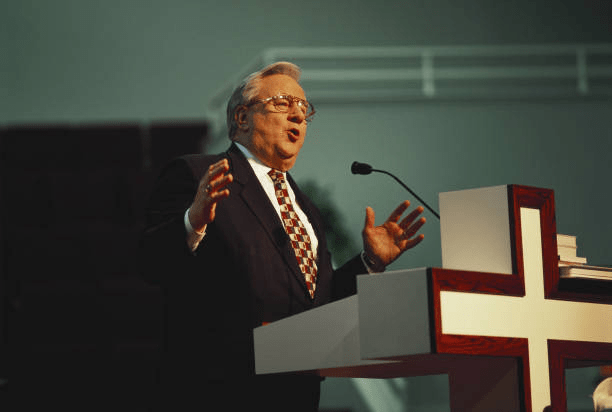
Romans 10:13 & 14 poses the question of how shall the unbeliever believe? The message to believe in the Gospel is declared in Mark 1:15. It is also declared by John the Baptist in Matthew 3:1 & 2 with the caveat that repentance was required. Jesus followed that up in Matthew 4:17 with a call for repentance. The first thing St. Paul and St. Peter called for was repentance as well.
Repentance which means to change your ways, is a prerequisite to salvation declared in the Gospel and made efficacious by the Holy Spirit. Jesus Christ lived a sinless life which means He did not need to repent of anything. On the other hand, the rest of us, past, present and future are all sinners and must repent.
We are to repent of our sins as a precondition to salvation being efficacious. Sin is understood by the Reformed faith as “…any want of conformity unto, or transgression of, the law of God.” As Jesus Christ is God manifested in the flesh, all Biblical law is authored by Him. Jesus further states that if you love me, you’ll keep my commands John 14:15 – 24. Now the Reformed faith agrees that the ceremonial and sacrificial laws were abrogated by the coming of Christ and His sacrifice on the cross. Nobody will deny that the moral law is still in place.
The rub comes with the “judicial” law or civil government laws still being valid. This writer would declare that all laws are legislated morality, and it is just a matter of whose morality is legislated. If God’s laws must give way to man’s laws, then to what extent can man take them before it becomes intolerable for the Reformed thinking people to say that’s too far – no more?
II Timothy 3:16 & 17 lends some perspective to this question. From above, we know that preachers are needed. Preachers are to proclaim the word of God to include the Gospel. In so doing, they are 1.) Declaring that “All Scripture is given by inspiration of God” 2.) that it is profitable for doctrine, reproof, correction and instruction in righteousness, 3.) so that the man of God may be complete, thoroughly equipped for every good work.
Let’s examine these three points. The Reformers will say that Scripture is authoritative, without error and true. If that’s the case, then one cannot question the veracity of Scripture, they can only interpret, and therefore apply it, correctly or incorrectly. Therefore, this writer believes it most reasonable and accurate to say that the Reformed faith holds the Scriptures in high regard when it comes to veracity and authority.
We’ll move on to point number 2. It is “profitable”! First on the list is “doctrine”. Doctrine comes from the Latin docere (to teach). Doctrine within the church is generally considered to be a codified set of beliefs, principles or teachings commonly accepted by a specific group or denomination.
Next, we have the word “reproof”. Leviticus 19:17 The word “rebuke” is synonymous with “reproof. In Leviticus we are confronted with a command “You shall surely rebuke your neighbor…”. This is not presented as an option. What’s particularly noteworthy is the reason for rebuking your neighbor. It is to avoid having to “bear his sin” (violation of God’s laws). Now, although this is the Old Testament, and under a Theocratic judicial system, it should be duly noted that Israel at the time was a community referred to as a “mixed multitude” Exodus 12:38 As such, everyone was considered to be subject to God’s laws regardless of their belief or unbelief – not all Israel was of Israel even in the Exodus.
The next word is “correction” which is a milder form of rebuke or reproof, because it means to restore someone who has gotten off track. and lastly is instruction in “righteousness”. Righteousness is the state of being morally justifiable and in right standing according to the Biblical standard in this case. Now all Reformed people know that we are only righteous in Christ, and otherwise, we are sinners in thought word and deed daily. So, the bottom line here is that the preacher is instructing his listeners (congregation) in the word of God and correcting and rebuking them when in error with the object in mind of giving them an understanding of what it means to be righteous – righteous in Christ primarily but also under Caesar or whatever authority is in place. And, if that authority either prevents or perverts righteousness, then what?
Romans 13 tells us that whoever that authority is, they must reward good and punish evil! Is that what America’s government is doing today?
Lastly, is point 3 that every man may be complete. In other words, apart from Scripture, man needs nothing more to be complete, and as it says, “…thoroughly equipped for every good work.” Now if Scripture, and the preaching of it makes us complete and thoroughly equipped, then what more do we need?
With that in mind, let’s go back for a moment to the disputation about the judicial law and its current applicability. Laws, times and cultures are subject to change. The change, if under God’s law word, will always be for the better. If under man’s law word, then we must rely upon man’s righteousness to implement Godly and good laws, and to administer true justice. If you’re in your right Theological mind, you know the latter is impossible.
Now in Matthew 23:23, Jesus rebuked the church leaders because they were “neglecting the weightier matters of the law; such as “justice”! Was Jesus talking about the moral righteousness being administered by the church leaders? Or, maybe he was talking about a failure to teach all that should be taught? Neglecting amounts to a failure to give proper care, attention or effort on behalf of someone. So, Jesus was rebuking the church leaders for failure to properly care for the believers. Is it even remotely possible that is happening in today’s churches?
In summation, this writer believes, without writing a tome, that it has been reasonably demonstrated from Scripture – not some Theologian’s opinion, that it is necessary for the Pastor (Preacher) to educate his flock in the whole counsel (law included) of God. The Reformed faith is very clear that you are saved only once, but you sin (violate God’s law) constantly. Therefore what percentage of the time should be spent on preaching salvation verses preaching about sin and the laws that are being broken and thereby harming our neighbor and ultimately ourselves? Remember, Romans 13:10, “LOVE DOES NO HARM“! And, it is the FULFILLMENT OF THE LAW!
Is there a difference between the law and the Gospel? It is said; “That we may further conceive aright the moral law, we must make a difference between it and the gospel, for the gospel is that part of the Word which promises righteousness and life everlasting to all that believe in Christ.” The Gospel does require repentance without which there is no righteousness – even Jesus called the unrighteous to repent. And “repent” of what? Violating God’s law!
Now if as they say, the judicial laws and their application are subject to question, then tell me which ones? Murder? Stealing? Lying? Cheating? Homosexuality? Adultery? Pornography? False weights and measures? Pedophilia? Incest? Polygamy? Which of these are o.k. in the civil arena? Why should the civil arena be any different than the church arena? Is it not all under God’s authority. Is not God/Jesus Lord of lords, King of kings, God of gods? Shall not every tongue confess and knee bow? By neglecting the civil arena, are we neglecting the weighter matters of the law and failing to love our neighbor?
What about Psalm 2 which declares opposition to Christ. Is that opposition o.k.? Shall Christians turn a blind eye to it. You know that when you make an exception to a rule, many more exceptions to the rule will follow until there are no rules at all!
Pensiamento Peligroso

 aceloewgold
 georgeclilly
 pensiamentopeligroso
