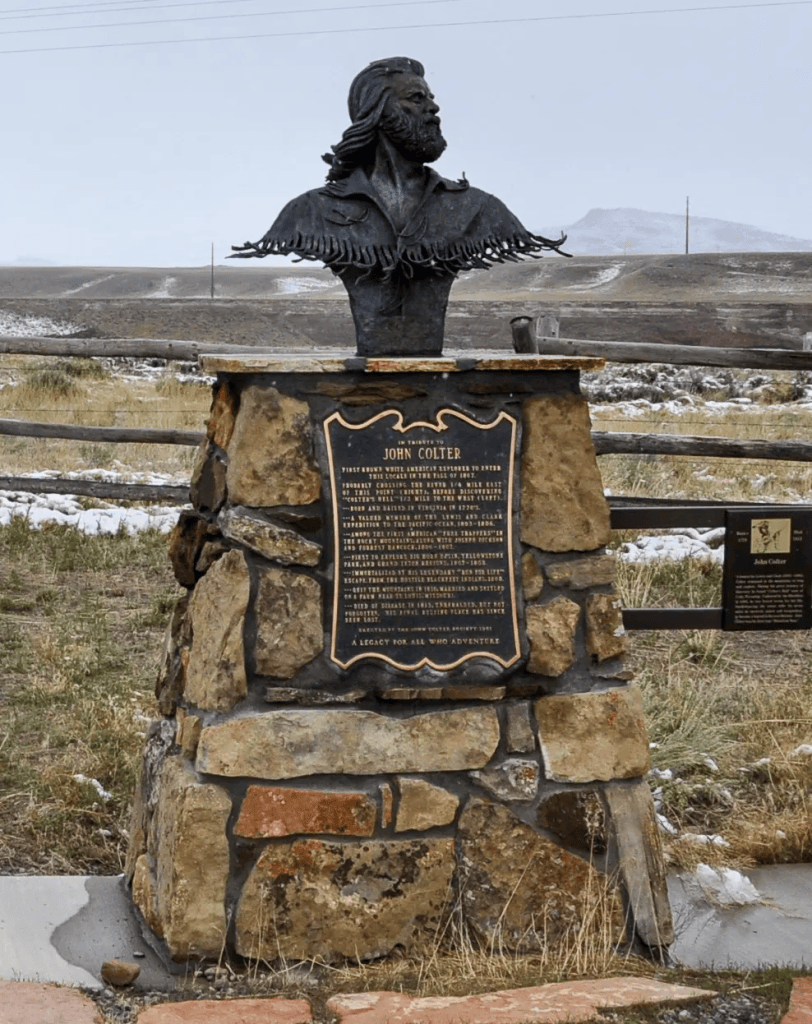
Run for Your Life
In 1808, Colter and another ex-member of the Corps, John Potts, were on a trapping expedition on the Jefferson River when suddenly they found themselves facing several hundred hostile Blackfeet. The Indians commanded them to paddle their canoe to shore, where an altercation between Potts and several Blackfeet resulted in him shooting one of the warriors. As Colter later described, Potts instantly became a target, struck with so many arrows that “he was made a riddle of.”
Colter was stripped naked, with some of the Blackfeet intending to use him for target practice, when a chief interfered and asked Colter if he could run fast. Colter, knowing what was about to happen, lied and said that he was slow afoot, whereupon the chieftain led him into the prairie several hundred yards away and released him. The watching Indians gave a war whoop, and the hunt began, with the Blackfeet streaming across the prairie after their quarry.
Here, John Colter’s reputation became legendary. He ran toward the Jefferson Fork, some six miles away, and ran so fast and hard that after several miles blood was streaming from his nostrils and mouth. He ran barefoot across rough terrain that included prickly pears and cactus, which pierced his flesh. He ran until he had outdistanced all the braves but one.
A quick glance over his shoulder told Colter this man would catch him. Making a snap decision, he stopped abruptly, whirled around, and raised his arms over his head. His pursuer, startled by this tactic, and perhaps by the blood now coating Colter’s torso, stopped, tripped, and fell, his spear breaking in the sand. Colter snatched up the weapon, drove it into the man’s body, grabbed the broken spear and the blanket the Indian wore, and ran on. When he reached the Madison River, he dove into the water and swam to a jumble of logs and driftwood, ducked inside it, and hid there for the rest of the day while the Blackfeet searched for him.
With only the blanket taken from the warrior he’d killed, Colter faced a 200-mile journey to the nearest fort. For 11 days—one report puts the number at seven—he walked, surviving on an edible breadroot called the prairie turnip, and stumbled into Fort Raymond. In his 1846 memoir, militia general and fur trader Thomas James recorded his interview with Colter, then wrote of his arrival, “His beard was long, his face and whole body were thin and emaciated by hunger, and his limbs and feet swollen and sore. The company at the Fort did not recognize him in this dismal plight until he had made himself known.”
Home Is the Hunter, Home From the Hill
Discrepancies occur in this story, with James’s account, for instance, having Colter hiding in a beaver lodge rather than in a tumbledown raft of driftwood. Nevertheless, “Colter’s Run” remains one of the most incredible American stories of grit and resilience.
After this race against death, Colter returned to trapping one more time and again encountered the warring Blackfeet. According to James, during this escape from death, Colter vowed before God that if he lived he would never return to the frontier. He made good on that oath at once by returning to Missouri, where one of his neighbors was the elderly Daniel Boone. There, he married a woman known only as Sally, or Sarah, and they had a son, Hiram. Colter died in his late 30s of an unrecorded disease.
Of Colter and his run, James wrote, “The whole affair is a fine example of the quick and ready thoughtfulness and presence of mind in a desperate situation, and the power of endurance, which characterize the western pioneer.”
Pensiamento Peligroso

 aceloewgold
 georgeclilly
 pensiamentopeligroso

