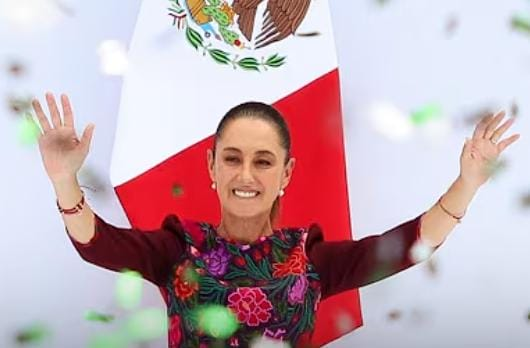
Mexico’s President is a drug cartel tool HERE! Drugs have been a tool for the self appointed rich and powerful to control the world for a long time – see the British East India Company’s history:
The British East India Company (EIC), established in 1600, played a significant role in the global drug trade, particularly in opium, throughout the 18th and 19th centuries. Its actions had profound impacts on global health, economics, and politics. Here’s a detailed historical account of the EIC’s involvement in the drug trade:
- Opium Trade: The EIC’s primary involvement in the drug trade was through the opium trade, which began in the late 17th century. The company cultivated opium poppies in India, primarily in Bengal, and exported the opium to China, where it was highly sought after for recreational and medicinal purposes (Barlow, 1999).
- First Opium War (1839-1842): The Chinese government, concerned about the social and health consequences of opium addiction, attempted to ban its import. This led to the First Opium War, in which the EIC, backed by the British government, fought against China. The war ended with the Treaty of Nanking, which opened five Chinese ports to British trade, legalized the opium trade, and granted Hong Kong to Britain (Fairbank, 1992).
- Second Opium War (1856-1860): The Second Opium War, also known as the Arrow War, was sparked by Chinese attempts to restrict the opium trade. The war ended with the Treaty of Tientsin, which further opened China to foreign trade and influence (Fairbank, 1992).
- Health Impacts: The EIC’s opium trade had devastating health consequences for the Chinese population. Opium addiction became widespread, leading to social unrest, economic decline, and a significant decrease in China’s population (Barlow, 1999).
- Economic Impacts: The opium trade generated substantial profits for the EIC and the British government. However, it also contributed to the economic drain of silver from China, destabilizing its economy (Fairbank, 1992).
- Political Impacts: The opium wars marked a significant turning point in Chinese history, leading to the decline of the Qing dynasty and the eventual establishment of the Republic of China in 1912 and opening the door for a Communist revolution two decades later. They also solidified Britain’s position as a global superpower (Fairbank, 1992).
The following Natural News article may be useful for further research:
Pensiamento Peligroso

 Break The Matrix
 Children's Health Defense
 Dan Bongino – The Dan Bongino Show
 Dr. Dave Janda
 Dr. David Martin
 For The Love of Freedom
 G. Edward Griffin – Need To Know News
 Greg Hunter USA Watchdog
 Jack Kettler – Underground Notes
 James Corbett – The Corbett Report
 John Stossel – Fox Business
 Luke Rudowski – We Are Change
 McAlavany Commentary
 Mercola
 Mike Adams – Natural News
 Mike Rivero – What Really Happened
 Paul Cameron – Family Research Institute
 Paul Craig Roberts – Institute for Political Economy
 Paul Joseph Watson
 Peter Schiff – Schiff Radio
 Ron Paul – Campaign for Liberty
 Stefan Molyneux – Freedom Radio
 The New American Magazine
 Thomas Sowell
 VisualPolitik EN
 aceloewgold
 pensiamentopeligroso
 Touch Stone Connect